
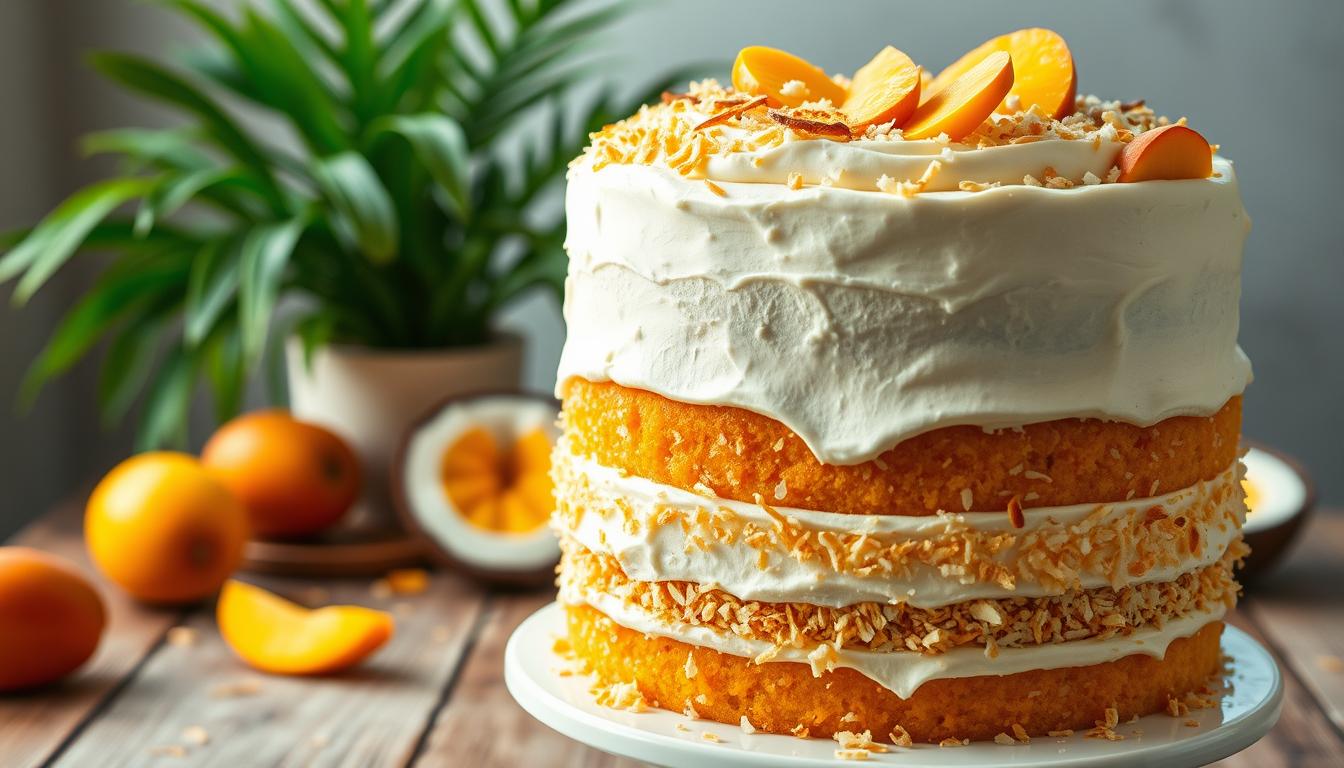
5 Professional secrets: mango coconut cake recipe
Surprising fact: this dessert requires 4 hours and 11 minutes from start to finish, including cooling enough time for a relaxed afternoon project that rewards you with a show stopping result.
You will love how three 8 inch pans give you tall, even layers. The cake layers are soft and fluffy and they hold a bright homemade mango curd between them.
Author Kelsie calls this a “tropical vacation on a plate,” and you’ll see why when you taste the creamy coconut frosting that tops each slice.
In this recipe you gather simple ingredients flour, sugar, butter, eggs and spend a few focused hours building texture and flavor. The result is a layered dessert with vibrant puree and silky cream that will impress friends and family.
Want to know why your mango coconut cake tastes dry and boring while bakery versions stay moist and incredibly flavorful for days? It’s not magic. It’s five professional techniques that pastry chefs use and now you can too.
Most home bakers fail at step one: picking the mango. Unripe mangoes taste like grass. Overripe ones turn fermented. Professional bakers choose Alphonso or Ataulfo mangoes at 90% ripeness still slightly firm, fragrant near the stem. That’s your first win. Purchase them 3-4 days before baking and let them ripen in a paper bag at room temperature.
Here’s the second mistake: using light coconut milk. Full fat coconut milk contains 13-14% fat the secret ingredient that keeps your cake moist for five days. Light versions are basically water. Buy canned full fat coconut milk from the international aisle and shake it well before using.
The actual baking technique separates pros from everyone else. Don’t just dump mango puree into your batter. Create a “mango coconut emulsion” by whisking fresh mango puree with egg yolks and sugar first. This distributes moisture evenly, preventing dense pockets that ruin texture.
After baking, brush each cake layer with “coconut simple syrup” (equal parts coconut milk and sugar, heated then cooled) before frosting. This adds moisture layers that professional bakers know about but rarely reveal. Use room temperature frosting applied with a hot, wet bench scraper for that bakery perfect finish.
If you’re building real pastry skills, check out our Orange Tart Recipe: 6 Perfectly Elegant Steps which teaches similar frosting techniques applied to French tarts. For comprehensive cake expertise, our Cake and Pastry Collection
covers additional professional recipes worth mastering. This recipe is also featured in our complete gluten free cake mix guide 25 easy recipes for perfect gluten free bakes every time.
According to Healthline’s guide to coconut milk, this ingredient is rich in healthy fats and natural creaminess exactly what gives this cake its signature moisture and depth of flavor.
The result? Mango coconut cake that tastes restaurant quality, impresses everyone at the table, and stays fresh far longer than homemade versions typically last. That’s not luck. That’s technique. And now it’s yours.
Why you will love this tropical dessert
Every slice delivers a sunny, refreshing bite that lifts the mood. This dessert blends bright fruit puree with silky frosting for a truly memorable treat.
Expect a flavor explosion: the fresh mango and creamy coconut combine to balance sweetness and tang in each layer. The result feels light and exciting, perfect for warm weather gatherings.
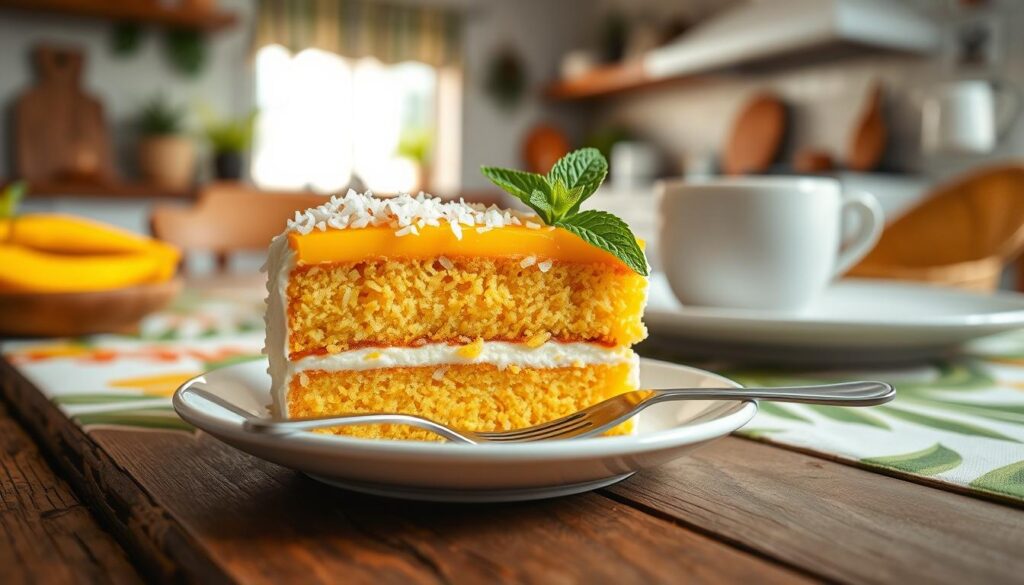
Kelsie calls this a playful twist on a classic coconut cake, and the notes hold true: familiar technique, bold new flavor. You don’t need a stand mixer to get great results; the steps are straightforward and forgiving.
- Bright, tropical taste that feels like sunshine on a plate
- Easy process suitable for home bakers
- Ideal for birthdays, picnics, or summer parties
In short: this mango coconut recipe is a crowd pleasing layered dessert that proves impressive baking can also be simple and joyful.
Essential ingredients for your mango coconut cake
Gathering the right items up front makes baking smoother and helps you hit perfect texture and flavor.
Selecting quality fruit
Choose ripe mangoes that are fragrant and yield slightly to pressure. Ripe fruit gives bright color and juicy texture to the curd and filling.
Choosing the right coconut products
Know the difference: cream of coconut and coconut cream are not interchangeable.
Cream of coconut is sweetened and often found near mixers or the liquor aisle; Coco Lopez is a trusted brand Kelsie recommends. This recipe needs 1 cup for the layers and 2 tablespoons for the frosting.
- Measure dry ingredients flour, baking powder, salt in a large mixing bowl before you start.
- Bring butter, eggs, and milk to room temperature to help the batter emulsify.
- Use quality vanilla and three 8 inch pans so the cakes bake evenly and rise well.
| Product | Sugar content | Typical use | Recommended amount |
|---|---|---|---|
| Cream of Coconut (Coco Lopez) | High (added sugar) | Sweet layers and frosting | 1 cup (layers), 2 tbsp (frosting) |
| Coconut cream | Low (unsweetened) | Savory dishes, thinning creams | Use only when unsweetened product is needed |
| Shredded coconut | None (unless sweetened) | Texture and garnish | As desired for topping |
Preparing the perfect mango curd filling
A glossy curd gives your layers bright flavor and smooth texture. Gather your ingredients and a heatproof saucepan before you begin.
Achieving the ideal consistency
Process the fruit in a food processor until you have 1/2 cup of smooth puree. In a saucepan, whisk that puree with eggs and sugar, then stir in butter.
Cook over medium low heat for 6 to 8 minutes, stirring constantly. You’ll know the curd is ready when it clings to the back of a wooden spoon and you can run your finger through it.
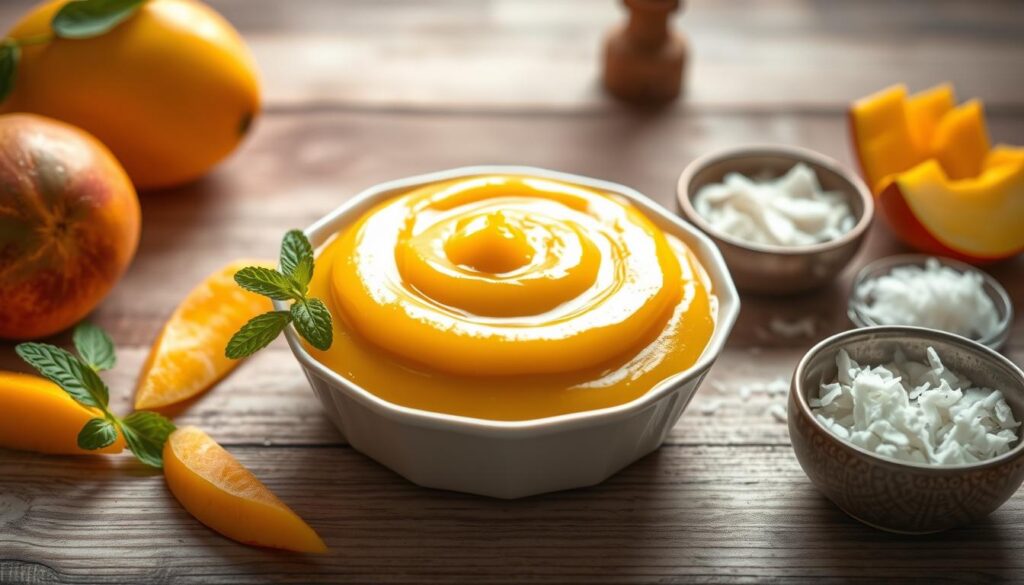
Pour the hot mixture through a fine mesh sieve into a bowl to remove any bits and ensure a silky texture. Press plastic wrap directly onto the surface to stop a skin from forming.
- Chill in the refrigerator for at least 2 hours, up to 2 days.
- Use a stand mixer or a simple whisk to fold curd into the filling if needed.
This curd forms a tangy layer that balances the richness of the frosting and completes your mango coconut cake recipe.
Baking moist and fluffy coconut cake layers
Simple setup preheat the oven and parchment line the pans keeps each layer uniform and tender. Preheat to 375 degrees and line the bottoms of three 8 inch cake pans with parchment paper.
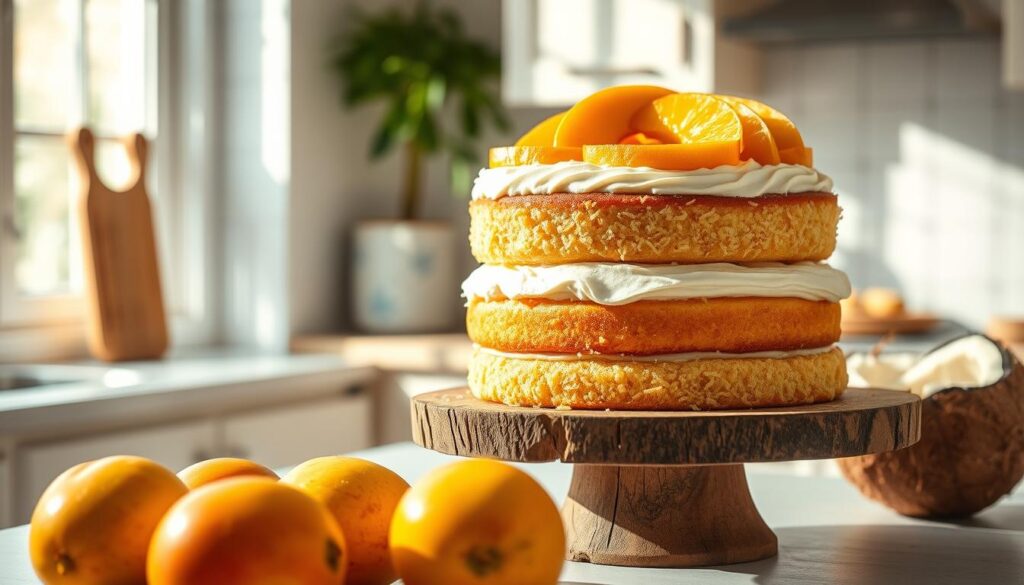
Mixing the batter
Cream butter, sugar, and cream of coconut in a large bowl with a stand mixer until light and fluffy. Add eggs, milk, and vanilla, then slowly fold in flour, baking powder, and other dry ingredients to form the batter.
Preventing over mixing
Once the flour is added, stop mixing as soon as the batter is combined. Overworking develops gluten and yields dense, bread like layers.
Scrape the sides and bottom of the bowl to catch any pockets of dry flour before dividing the batter evenly between the lined pans.
Cooling techniques
Bake the cakes for 30 to 35 minutes, testing with a cake tester until it comes out clean. Cool the pans on a rack for 20 minutes, then invert each pan onto a wire rack to cool completely to room temperature.
| Step | What to do | Why it matters |
|---|---|---|
| Prep | Preheat to 375°F; line pans with parchment | Ensures even rise and prevents sticking |
| Mix | Cream in stand mixer; add wet, then dry | Incorporates air and gives tender texture |
| Bake & Cool | Bake 30–35 minutes; cool 20 minutes in pans | Sets crumb and prevents tearing when removed |
Mastering the creamy coconut frosting
The right texture comes from beating butter until it is silky, then building flavor in stages.
Start with room temperature butter. Use a stand mixer fitted with the whisk attachment and beat the butter until it is very smooth and pale. This step gives your frosting a light, airy base for flavor.
With the mixer on low, add the cream of coconut, milk, vanilla, and a pinch of salt. Beat for 1 minute so the ingredients combine well before you add powdered sugar.
- Gradually add powdered sugar on low speed to keep dust out of the room.
- Increase the speed to medium and whip for several minutes until the frosting is pipeable and holds its shape.
- Scrape the sides of the bowl frequently so no pockets of sugar remain.
If the frosting is too thick, add more milk or cream by the tablespoon. If it’s too thin, add more powdered sugar and whip again. Chill for 15–20 minutes to firm the spread before final decorating.
Pro tip: This frosting makes a stable, rich layer for your mango coconut cake and holds up during baking weather changes. Enjoy spreading and piping with confidence.
Assembling and decorating your mango coconut cake
A steady hand and chilled layers make a professional looking finish easy to achieve.
Place the first cake layer on a board or turntable and spread a thin skim of frosting from the center to the edge.
Measure curd carefully: spoon 1/4 cup of mango curd into the center of each layer. Keep it at least 1/2 inch from the edge so it won’t seep into the frosting.
Trim domes with a serrated knife so layers stack flat. Add each layer and apply a thin crumb coat of frosting.
- Refrigerate the filled, crumb coated cake for 20 minutes to set the layers.
- Toast 1 cup of shredded coconut at 350 degrees for 4 to 5 minutes, watching closely.
- After chilling, apply the final coat of frosting and press toasted coconut into the sides.
For decorations, use a piping bag with a whisk attachment or star tip to make swirls on top. Keep the cake refrigerated until serving so the frosting holds its texture.
Bringing the taste of paradise to your kitchen
From bowl to pans to the final slice, this dessert transforms ordinary baking time into something special.
By following the steps, you balanced fresh puree with rich cream and a fluffy batter to build a bright, layered treat. Take your time during cooling those extra minutes make a big difference.
Share the results: serve the mango coconut cake chilled, top with toasted flakes, and enjoy the smiles. This recipe rewards good ingredients, patient hands, and a little sugar sparked joy.
Your email will not be published publicly.