
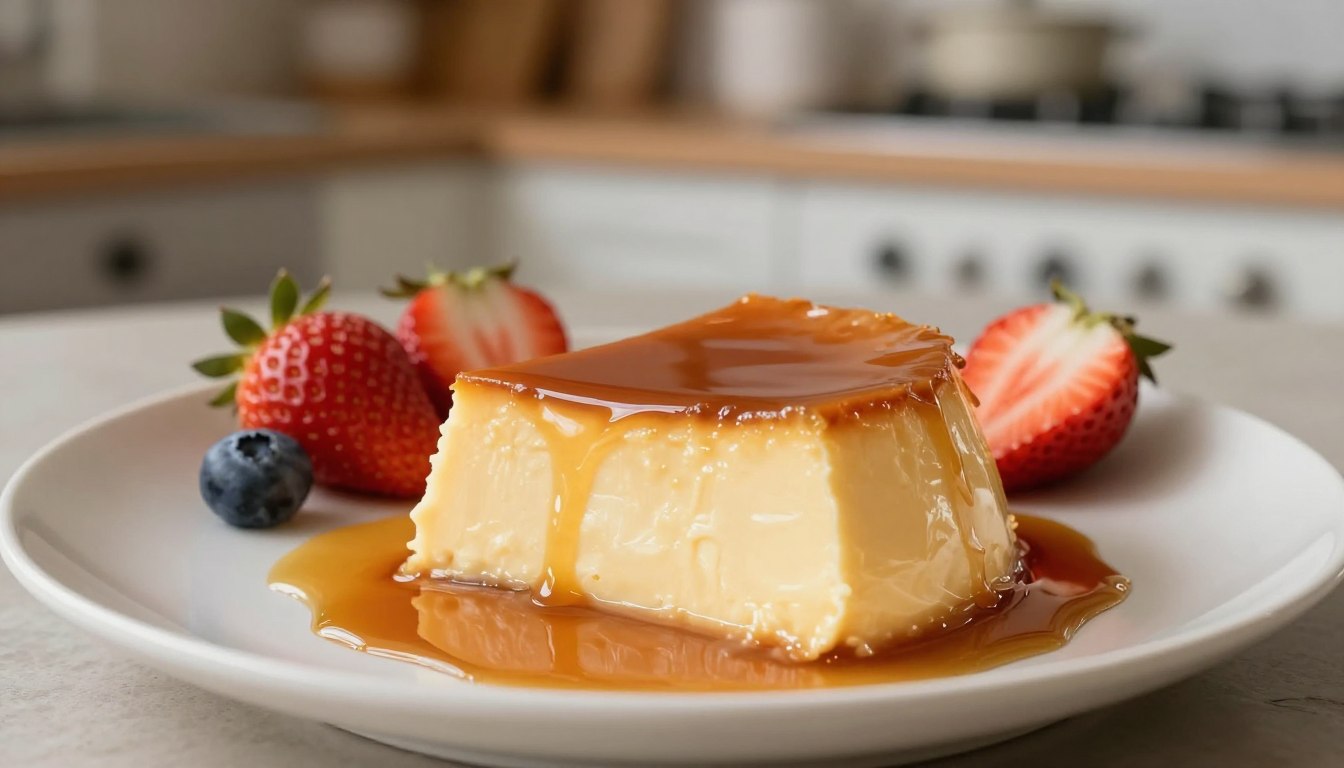
Flan de queso: 5 proven tips for an irresistible silky slice
Flan de queso is a chilled, caramel glazed dessert that feels special without requiring complicated techniques. This creamy, cheesecake like flan makes a welcome weekend treat or a holiday dessert you can prepare ahead. Its three main stages are making caramel, blending custard, and baking gently in a water bath.
A water bath is a larger pan of hot water surrounding the flan pan during baking to help the custard cook gently and evenly. The result is a tender, smooth dessert with a caramel top and a mild tang from cream cheese. You can make it with everyday tools and a little patience. If you enjoy creamy desserts that rely on condensed milk, you will also like our creamy no bake cheesecake made with condensed milk.
Room temperature ingredients help the custard blend evenly, while a full chill gives each slice a neat shape. The oven does most of the work, so you can plan the time around a meal or gathering. Set out your pan before you start, and keep a serving plate nearby for later. The next section gives you the precise ingredients and amounts.
What goes into this cream cheese flan?
Yes, cream cheese is what gives this version its gentle tang and cheesecake like body. The other ingredients build a smooth custard and a thin caramel layer, so each one has a clear job.
Recipes can vary, but this version uses five eggs and two teaspoons of vanilla. The simple ingredient list gives you a rich flan without extra flavorings or special products. For a classic point of comparison, you can look at a cream cheese flan on Allrecipes.
Ingredients for the caramel
Granulated sugar makes the caramel topping. Measure it before you begin, so it is ready when you need it. You do not need water or another sweetener for this layer.
Ingredients for the custard
This flan de queso ingredients list uses cream cheese for its mild tang and denser, cheesecake like quality. Soften the cream cheese first, which helps it blend with the milk and eggs, the same trick we use in our Philadelphia cheesecake no bake. Use large eggs at room temperature for a more even custard.
| Ingredient | Amount | Role | Prep |
|---|---|---|---|
| Sugar | 1 cup | Caramel topping | Measured and ready to melt |
| Cream cheese | 8 ounces | Tangy, cheesecake like body | Softened |
| Sweetened condensed milk | 14 ounces | Sweetness and richness | Use one can |
| Evaporated milk | 12 ounces | Fluid base for the custard | Use one can |
| Eggs and vanilla | 5 large eggs and 2 teaspoons vanilla | Structure and flavor | Bring eggs to room temperature |
Sweetened condensed milk brings both sugar and body, while evaporated milk loosens the mixture. Together, they give the custard a creamy finish without needing cream. The eggs help it set as it bakes.
Use one can of each type of milk, and measure the vanilla before blending. Once you have softened the cream cheese and measured the ingredients, you are ready to make the caramel and custard.
How to make flan de queso at home
Start by heating the oven and setting a kettle of water to boil while you prepare the pan. A steady setup makes the hot water step easier and keeps the baking on track.

Prepare the pan and make the caramel
This easy flan de queso recipe follows three simple stages. Choose an 8 or 9 inch round cake or pie pan with sides at least 2 inches high. Set it inside a larger baking pan, such as a 13 by 9 inch roasting pan.
Keep the outer pan nearby while you make the caramel. The water bath will go into that pan after the filled flan pan is in place. Use oven mitts when handling the boiling water.
Blend and strain the custard
Use a blender to combine the softened cream cheese, both milks, eggs, and vanilla until smooth. Stop once no cream cheese lumps remain. Too much blending can add air to the mixture.
Strain the custard through a fine mesh strainer as you pour it into the pan. This catches small lumps and helps keep the baked texture even. Pour slowly, so you do not splash the caramel up the sides.
Bake, cool, and chill
Follow these steps to bring the caramel and custard together:
- Heat the oven to 350°F. Set a kettle of water to boil, and nest the flan pan inside the larger baking pan.
- Melt the measured sugar in a saucepan over medium heat. Swirl the pan as the sugar melts, then cook it to dark golden amber. The caramel hardens quickly, so pour it into the flan pan immediately after removing it from the heat.
- Blend the custard ingredients until smooth, then strain the mixture into the caramel lined pan.
- Place the nested pans in the oven. Pour boiling water into the outer pan to about 1 inch deep. Bake for about 1 hour, until the edges are set and the center still jiggles slightly.
Keep the water level near 1 inch, and avoid splashing water into the custard. If the water bath starts to boil hard, the custard may bake too quickly around its edges. The gentle heat helps the center set without turning firm or dry.
After baking, cool the flan in the water bath for about 1 hour. Lift the inner pan carefully, then let it cool before covering it. Refrigerate for at least 2 hours, with overnight chilling preferred.
A slight jiggle in the center is a better cue than waiting for the whole surface to look firm. The custard will continue to set as it cools. With the method established, the next section helps you avoid the texture and caramel problems that can spoil a batch.
Flan de queso recipe card
Recipe at a glance: yield 8 servings, prep time 20 minutes, total time 4 hours 20 minutes, 6 ingredients, about 450 calories per serving.
Ingredients
- 1 cup granulated sugar
- 8 ounces cream cheese, softened
- 14 ounces sweetened condensed milk (1 can)
- 12 ounces evaporated milk (1 can)
- 5 large eggs, at room temperature
- 2 teaspoons vanilla extract
Instructions
- Heat the oven to 350°F and set a kettle of water to boil. Place an 8 or 9 inch round pan with sides at least 2 inches high inside a larger roasting pan.
- Melt the sugar in a saucepan over medium heat, swirling the pan instead of stirring, until it turns dark golden amber. Pour it into the round pan right away and tilt to coat the bottom.
- Blend the softened cream cheese, condensed milk, evaporated milk, eggs, and vanilla until smooth. Strain the mixture through a fine mesh strainer into the caramel lined pan.
- Place the nested pans in the oven and pour boiling water into the outer pan to about 1 inch deep. Bake for about 1 hour, until the edges are set and the center still jiggles slightly.
- Cool the flan in the water bath for about 1 hour, lift out the pan, and let it cool. Cover and refrigerate for at least 2 hours, with overnight chilling preferred.
- Run a thin knife around the edge, set a rimmed plate upside down over the pan, and invert both together. If the flan sticks, dip the pan bottom in warm water for a few seconds and try again.
How do you keep the caramel and custard smooth?
If you walk away from melting sugar, it can pass from amber to burnt before you notice. Stay nearby, watch the color, and swirl the pan instead of stirring repeatedly.

Keep the caramel from burning or crystallizing
Sugar can crystallize when you work it too much as it melts. Swirling moves the sugar without scraping crystals from the pan’s sides back into the caramel. Keep the heat steady, and take the pan off the burner when the color reaches dark golden amber.
A dark pan can make the caramel shade hard to judge. Drip a little caramel from a metal spoon onto a small plate, then check its color there. You can cook it to a deep amber shade for a bittersweet edge, but stop before it smells burnt.
Prevent lumps, air pockets, and overcooking
Room temperature eggs and softened cream cheese help the custard blend smoothly. Cold cream cheese may leave small lumps that the blender has trouble breaking up. Let both ingredients warm before you mix them.
Use a blender only until the mixture looks smooth. Whisking hard or blending too long can trap air, which may leave pockets in the finished custard. Straining the mixture catches stray lumps, but it cannot remove every air bubble.
Excess heat can curdle the custard and give it a grainy texture. Overcooking can also form a skin and make the center firm instead of tender. Watch for set edges and a center that still jiggles slightly when you move the pan.
After unmolding, the caramel left in the pan becomes the flan de queso sauce on top. A deep amber color gives that sauce a richer, slightly bitter taste, while burnt sugar can overwhelm the cream and vanilla. Once you can spot these warning signs, you can focus on serving the flan cleanly and choosing the right way to describe this style.
How should you serve and store flan?
A rimmed plate gives the caramel somewhere to go when you turn the chilled flan out of its pan. A short wait and a careful turn help you serve a clean slice without losing the sauce.

Unmold and serve without losing the caramel
Use these three actions to release the flan and catch the caramel:
- Run a thin knife around the edge of the flan to loosen it from the pan.
- Set a rimmed plate upside down over the pan. Hold both firmly, then invert them together.
- If the flan sticks, dip the pan bottom in warm water for a few seconds and try again.
Keep the plate close to the pan as you turn it. The caramel will run across the plate, so a rim helps prevent spills. If you are serving several people, cut slices with a clean knife and wipe it between cuts.
Serve each slice chilled, with some caramel sauce from the plate. The custard should feel creamy, not stiff, and the cheese gives it a denser texture than a plain egg custard. Keep any leftover flan covered in the refrigerator. On a make ahead dessert table, it sits nicely beside a slice of cracker crust cheesecake.
Puerto Rican, Cuban, and Mexican flan names
Puerto Rican style flan de queso is a cream cheese flan. The recipe’s Puerto Rican label does not establish a precise flan de queso origin or prove an exclusive origin for this dessert.
Recipes and names can vary across Puerto Rican, Cuban, and Mexican cooking. The name Cuban flan de queso may describe a cheese version, but it does not by itself define one fixed set of ingredients or a firm line between regional styles.
For that reason, describe the dessert you made rather than claiming a single origin. Calling it Puerto Rican style flan de queso fits this cream cheese recipe, while a different family’s version may use another name or method.
Consider the recipe’s fit for a keto diet
This standard recipe is not keto because it includes sugar and sweetened condensed milk. Both ingredients add carbohydrates, and the milk also gives the custard much of its rich, sweet taste.
Changing those ingredients can affect sweetness, texture, and how well the custard sets. Do not assume a direct swap will bake the same way. If you follow a keto diet, choose a version designed for that diet instead.
A chilled slice works well after a family meal or as part of a holiday spread. Serve it with the caramel gathered on the rimmed plate, and choose a regional description that matches what you actually made. Then enjoy a dessert that is ready before guests arrive.
Conclusion
You can make a silky, caramel topped flan at home by giving the sugar and custard the attention they need. Careful caramel timing and a full chill support a clean slice with a creamy center.
Before you begin, soften the cream cheese and bring the eggs to room temperature. That small bit of planning helps the custard blend smoothly and keeps the work relaxed. Prepare the ingredients and make this recipe for your next weekend or holiday dessert.
Frequently asked questions
Should I add cream cheese to my flan?
Yes, add cream cheese when you want flan de queso. It gives the custard a mild tang and a denser, cheesecake like body. Classic flan does not require cream cheese, so the choice depends on the style you want. For a smooth blend, soften the cheese first and use eggs at room temperature.
What’s the difference between Puerto Rican flan and Mexican flan?
Recipes and styles vary, so there is no single difference that fits every Puerto Rican or Mexican flan. This cream cheese version is described as Puerto Rican style flan de queso, but that label does not define all regional recipes. Families may use different ingredients, names, or methods, so describe the version you actually make.
What is the easiest way to make flan?
The easiest method is to blend room temperature custard ingredients, strain them, and bake the pan in a water bath. Set the oven to 350°F, then pour the strained mixture into the caramel lined pan. Bake until the edges set and the center still jiggles slightly. Chilling gives the custard time to firm before serving.
What do Americans call flan?
In the United States, people commonly call this dessert flan. It is a custard served with caramel, often turned onto a plate so the sauce flows over the top. Cream cheese makes one version richer and denser, but the word flan does not always mean a cheese based recipe.
Is flan a Mexican thing?
No, flan is not exclusive to Mexico. Flan de queso is also associated with Puerto Rican cooking, and recipes with similar names appear in other regional traditions. The recipe’s Puerto Rican style label does not establish a precise origin for the dessert. Names and methods can vary from one family or recipe to another.
Is flan an unhealthy dessert?
Flan contains sugar in its caramel, and sweetened condensed milk adds more sugar and richness. Whether it fits your diet depends on portion size and what you eat overall. A small slice can be part of a varied diet, while a larger serving adds more sugar and calories.
Why does flan taste bad?
Burnt caramel can taste bitter, while too much egg can make the custard taste eggy. Graininess may come from excess heat or overcooking, and air pockets can form when you whisk too much. Use room temperature ingredients, blend only until smooth, and remove the flan when its edges set and center still jiggles.
Your email will not be published publicly.