
Lemon blueberry sourdough bread: 4 brilliant summer tips
Imagine waking up to the scent of warm bread and citrus in your kitchen. You pull out a golden loaf, showing off a juicy interior. This lemon blueberry sourdough bread is perfect for those who love tangy and sweet flavors.
Making this bread might seem hard, but it’s easy once you get the hang of it. Our step by step sourdough recipe will help you make a bakery quality loaf at home. You’ll learn how to mix in fresh ingredients without messing up your bread.
Whether you’re an experienced baker or just starting, this guide has everything you need. Get ready to turn your kitchen into a bakery with this refreshing loaf. It’s like summer in every slice.
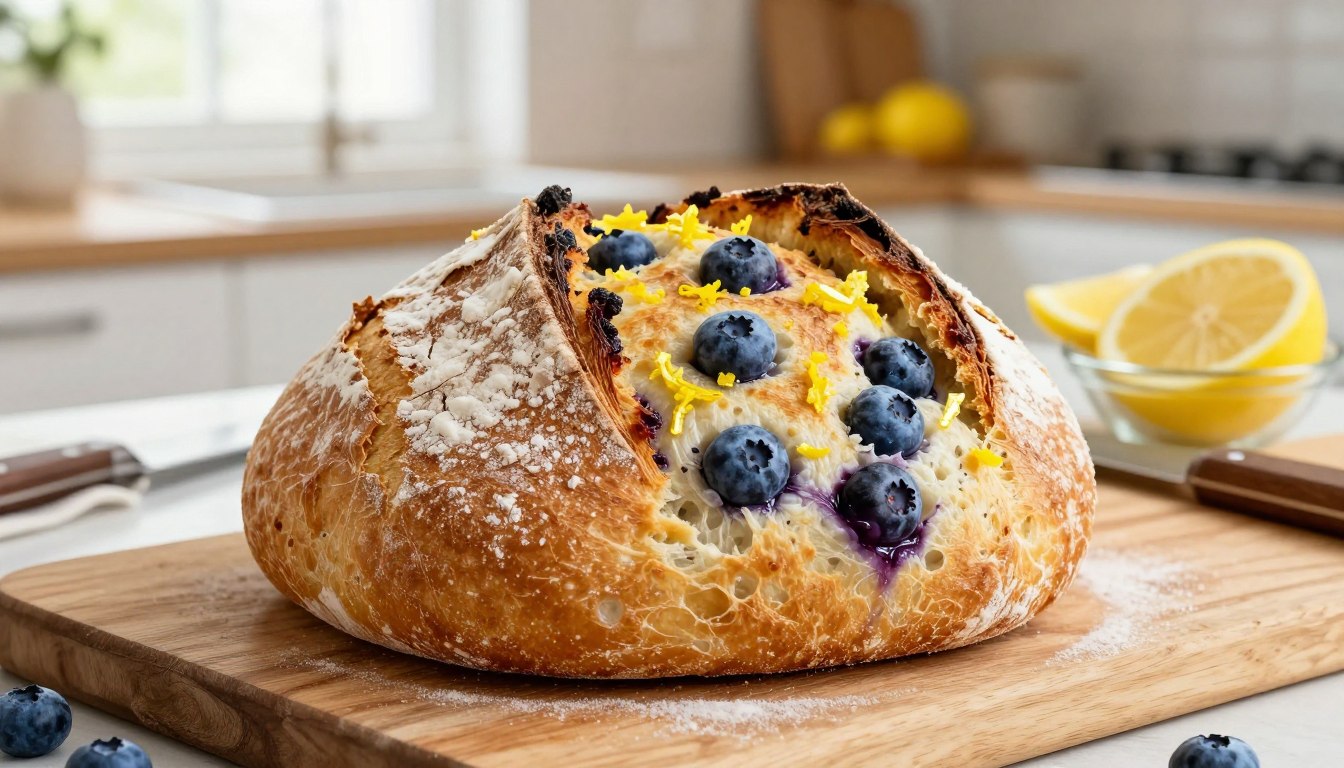
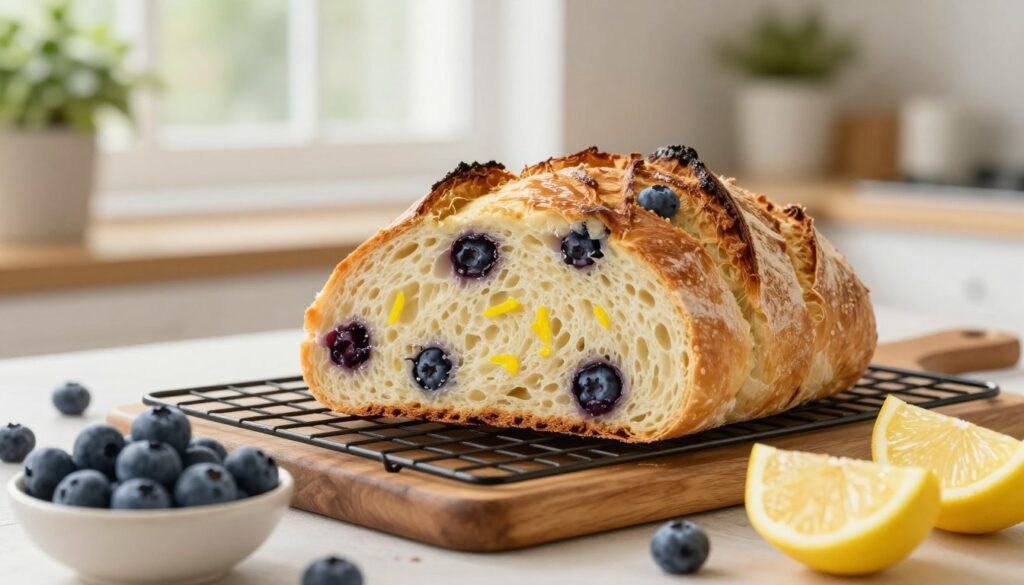
That golden loaf pulled from a hot Dutch oven the one with the crackly crust, the violet blueberry pockets visible through the score, and the citrus smell that fills the kitchen the moment you open the oven is closer than it looks. Lemon blueberry sourdough bread follows the same fundamental steps as any artisan loaf. The difference is in four specific details that make this version genuinely special rather than just flavored.
Rubbing the lemon zest into sugar before it goes into the dough doubles the citrus intensity without adding liquid that would throw off the hydration. Tossing the blueberries in flour before the lamination fold prevents them from sinking and reduces the purple bleed into the crumb. Timing the fold for the second stretch and fold window keeps the berries intact through bulk fermentation. And the overnight cold proof develops a slow tang that makes the lemon flavor taste brighter in the finished loaf than it does in the dough.
Those four details applied once become second nature. And the result is a loaf that makes people stop and ask where you bought it.
If you love baking with fruit and enriched doughs, our Panettone Bread Pudding shows you what happens when an Italian fruit enriched loaf meets a French custard technique the most brilliant way to use a holiday bread. And for a completely different style of bread that uses a simpler, no starter technique, our Sub Roll recipe gives you a soft, chewy roll in a fraction of the time perfect alongside a slice of this sourdough for a summer brunch spread.
For the most reliable sourdough bread foundation including the active starter check, the stretch and fold schedule, and the Dutch oven technique that creates the perfect crust King Arthur Baking’s Basic Sourdough Bread recipe is the most beginner friendly and thoroughly tested reference available the exact foundation this lemon blueberry variation is built on.
Four details. One brilliant loaf. The most beautiful summer bread you will ever pull from your oven. Scroll down the recipe is ready.
Introduction to lemon blueberry sourdough bread
If you love sourdough’s tang, you’ll love this lemon blueberry version. It adds bright citrus and juicy fruit to the classic sourdough. This makes it a refreshing twist for your morning.
Following a step by step recipe helps you balance these ingredients. The process is rewarding, whether you’re experienced or new to baking. This recipe adds a professional touch to your kitchen.
What makes this bread unique?
The magic happens when wild yeast meets fruit. Unlike regular sourdough, this version adds sugar for a caramelized crust. The sourdough starter’s acidity balances the blueberries’ sweetness.
The dough’s moisture from the berries needs extra care during folding. This ensures the fruit stays whole. The result is a stunning, marbled interior that’s as delicious as it looks.
Flavor profile highlights
The flavors blend tart lemon zest with sweet blueberries. The lemon adds a bright, aromatic touch. Toasted, the blueberries’ sugars create a deep sweetness that’s perfect with butter or honey.
This bread is a breakfast favorite. It’s hearty yet light, making it a great choice for a morning treat. Here’s how it compares to a standard loaf:
| Feature | Standard sourdough | Lemon blueberry sourdough |
|---|---|---|
| Primary Flavor | Tangy and Earthy | Bright, Sweet, and Tart |
| Crumb Texture | Chewy and Open | Soft and Moist |
| Best Pairing | Savory Soups | Creamy Spreads or Honey |
| Aroma | Yeasty and Nutty | Citrusy and Fruity |
Ingredients for lemon blueberry sourdough bread
Starting to bake the perfect bread means choosing the best ingredients. Having everything ready before you begin makes the process smoother. This ensures a delicious lemon blueberry sourdough bread.
Essential ingredients you’ll need
The base of a great loaf is the flour. Use bread flour with a protein content of 13% or higher for a strong structure and chewy crumb. This high protein helps the dough handle the fruit’s weight during fermentation.
You’ll also need an active sourdough starter, water, salt, fresh blueberries, and organic lemons. Rubbing lemon zest into sugar before mixing adds a burst of citrus flavor. This step makes your loaf’s aroma more intense.
| Ingredient | Purpose | Quality tip |
|---|---|---|
| Bread Flour | Structure | 13% Protein minimum |
| Sourdough Starter | Leavening | Active and bubbly |
| Lemon Zest | Flavor | Organic, freshly grated |
| Blueberries | Texture | Fresh or frozen |
Optional add ins and variations
Once you get the basic recipe down, try adding different flavors to your lemon blueberry sourdough bread. Many bakers love adding a swirl of lemon curd for a tangy surprise.
Adding white chocolate chips or poppy seeds can also enhance the bread. These extras add a nice contrast in texture and sweetness. Just be gentle when adding them to avoid damaging the dough or fruit.
Equipment you will need
Getting your kitchen ready with the right tools is key to making great homemade sourdough. You don’t need to buy everything at once. Just a few essential items will do. The right equipment helps your dough behave well every step of the way.
Basic baking tools
Working with wild yeast requires precision. A digital kitchen scale is crucial. It lets you measure ingredients by weight, not volume. This consistency is what makes many sourdough recipes successful.
You’ll also need a big mixing bowl for the dough as it grows. A strong bench scraper is vital for handling sticky dough. These basic tools are the foundation for every loaf you bake.
Specialty equipment for sourdough
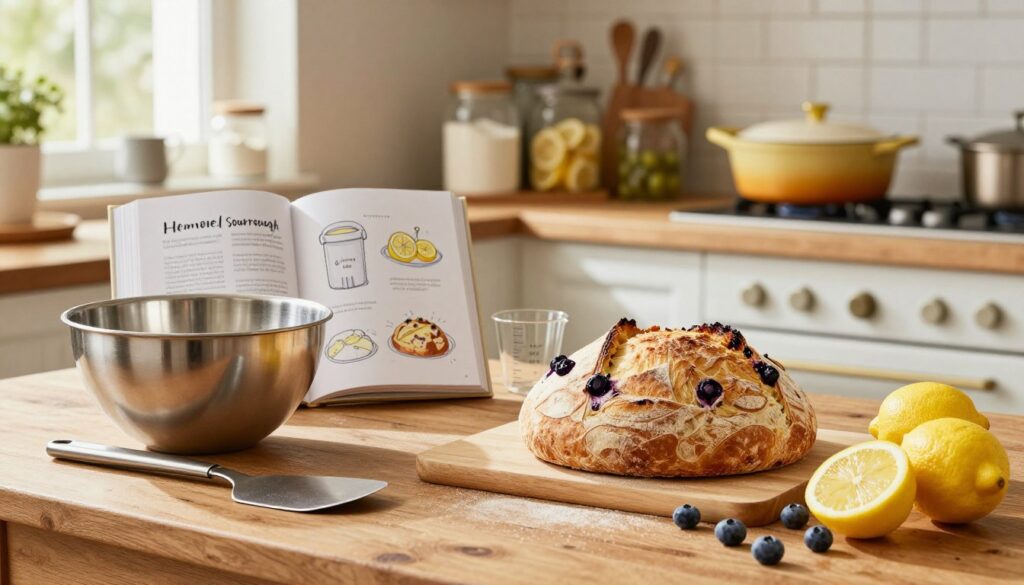
To get that bakery quality bread, you’ll need some specialized tools. A Dutch oven is best for baking. It traps steam, which makes the bread rise and gives it a crispy crust.
A bread lame is a sharp tool for scoring the dough. Scoring helps the bread expand evenly, preventing it from bursting. A proofing basket also helps keep the dough’s shape as it rests before baking.
| Tool name | Primary function | Why It matters |
|---|---|---|
| Digital Scale | Measuring ingredients | Ensures recipe accuracy |
| Dutch Oven | Trapping steam | Creates a crispy crust |
| Bread Lame | Scoring the dough | Controls loaf expansion |
| Proofing Basket | Supporting shape | Prevents dough flattening |
Understanding sourdough starter
A healthy, active starter is the heart of your sourdough recipes. It’s a mix of wild yeast and good bacteria. This mix makes your bread rise.
Without a strong starter, your dough won’t rise well. It’s key for a light, flavorful loaf.
What is sourdough starter?
A starter is a mix of flour and water that ferments. Over time, it gets wild yeast from the air, becoming bubbly and active.
Feeding it fresh flour and water makes it work. The yeast eats sugars and makes carbon dioxide. This is what makes your bread rise.
How to prepare your starter
To get your starter ready, follow a feeding schedule. A 1:1:1 ratio of starter, flour, and water works well in 4 to 6 hours.
The temperature of your kitchen affects this time. Warm kitchens make starters rise faster, cool ones slower.
Adjusting the ratios helps fit your schedule. More flour slows it down, warmth speeds it up.
Make sure your starter is bubbly and active before mixing dough. This simple check is key to success with sourdough.
Mixing the dough
Mixing the dough is where your fruity sourdough bread starts to come alive. Before you begin, remember mixing sugar with lemon zest releases fragrant oils. This step boosts the lemon flavor in your loaf.
The role of hydration in sourdough
Hydration is the water to flour ratio in your recipe. It’s key for a light, airy texture. If you’re unsure, check out sourdough starter guidance to make sure your starter is ready.
Use an autolyse period of 30 to 45 minutes after mixing. This rest helps the flour hydrate and starts gluten development. It makes the dough easier to work with later.
Step by step mixing instructions
Start by mixing your active starter, water, lemon juice, and flour in a big bowl. Mix until you get a shaggy, sticky mass. Make sure there’s no dry flour left.
After the autolyse, add salt and any extra water. Fold the dough to mix these in well. This ensures the salt is spread evenly, which is crucial for a great loaf.
| Hydration level | Dough texture | Best use case |
|---|---|---|
| Low (65%) | Stiff and easy to shape | Beginner loaves |
| Medium (75%) | Balanced and elastic | Standard artisan bread |
| High (85%+) | Very sticky and soft | Advanced open crumb |
Incorporating blueberries and lemon
Turning a basic loaf into a fruity sourdough bread starts with adding fresh ingredients. It’s all about timing to keep the dough’s structure and add flavor.
Choosing the right blueberries
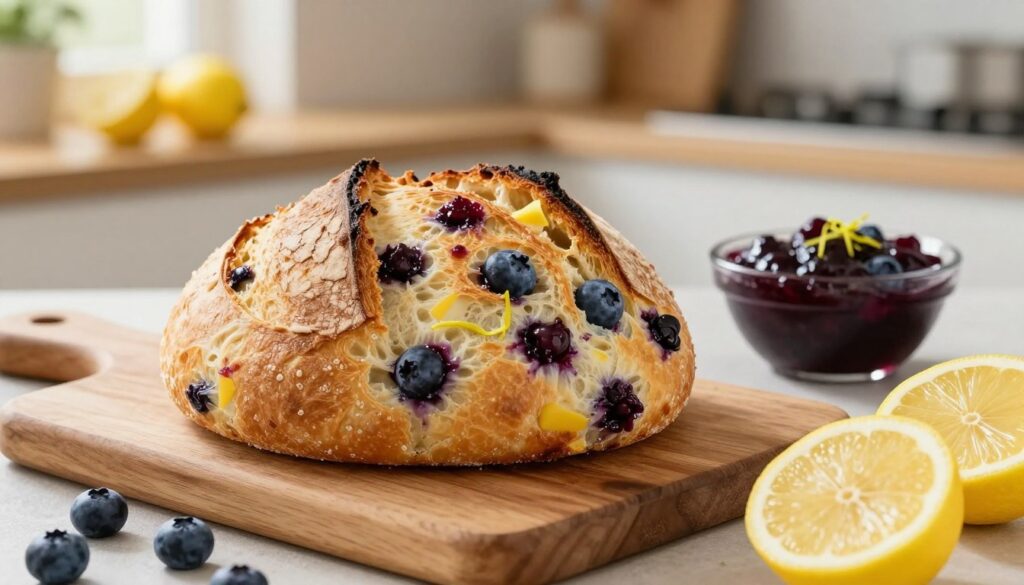
Choose fresh blueberries over frozen ones for the best taste. Frozen berries can make your dough too wet and hard to work with.
Add fresh blueberries during the second stretch and fold. This way, they’re evenly distributed without squishing their skins.
Enhancing flavor with lemon zest
Lemon zest adds a bright, aromatic flavor that goes well with the berries. Use a fine microplane to grate the yellow peel, avoiding the bitter white pith.
Mixing the zest into the dough early lets the flavors spread throughout. This makes your fruity sourdough bread refreshing in every bite.
Be gentle when folding the dough. This keeps the berries whole and the bread light and airy.
Bulk fermentation process
Mastering the bulk fermentation stage is key to a perfect sourdough crumb. This stage is where your dough gets its structure and flavor from wild yeast. By following these sourdough baking tips, you can learn to read your dough rather than relying solely on a timer.
What to expect during fermentation
The dough will change a lot during this time. It will become more aerated and elastic as the gluten network strengthens. Remember, temperature greatly affects how fast this happens.
In a warmer kitchen, yeast works faster, shortening the rise time. But, a cooler environment slows it down. Watching your dough’s environment is crucial for consistent results.
Signs of proper fermentation
You’ll know your dough is ready when it has doubled in size. The surface should be smooth and slightly domed, showing trapped gas.
The “jiggle test” is another good sign. When you gently shake the bowl, the dough should wobble like gelatin. If it feels light and airy, it’s time to shape.
| Environment | Fermentation speed | Dough texture |
|---|---|---|
| Warm (75°F+) | Fast | Very bubbly and soft |
| Room Temp (70°F) | Moderate | Balanced and elastic |
| Cool (65°F) | Slow | Dense but active |
Using these sourdough baking tips will boost your confidence in the kitchen. Always trust the visual cues of your dough over the clock for the best loaf.
Shaping the dough
Now, it’s time to turn your soft dough into a beautiful loaf. Shaping is key because it makes the dough’s outer skin tight. This tight skin helps your loaf keep its shape and rise well during baking.
If you don’t shape it right, your bread might end up flat. But with these sourdough baking tips, you can get that perfect crust and crumb.
Techniques for shaping sourdough
First, gently place your dough on a floured surface. Be gentle to keep the air bubbles in the dough.
- The Stitching Method: Pull the dough’s edges toward the center to form a tight ball.
- The Tension Pull: Drag the dough with a bench scraper to tighten the skin.
- Final Seal: Pinch the seams to keep the loaf secure during proofing.
Tips for adding blueberries
Adding fruit to your dough needs care to avoid damaging the dough. When shaping, watch out for blueberries on the surface.
Blueberries on the surface can burn in the Dutch oven’s heat. Here’s how to handle them:
- Tuck and Fold: Tuck any blueberries into the dough’s folds as you shape it.
- Internal Placement: Make sure most berries are inside the loaf.
- Surface Check: Before proofing, check the dough’s surface and push any fruit inside.
Keeping the dough’s surface smooth and fruit free helps get a golden crust. Learning these shaping techniques is crucial for any sourdough baker.
Proofing the dough
Mastering the proofing process is crucial for perfecting your sourdough bread. This stage lets yeast and bacteria do their job. It ensures your loaf is light and has a great texture.
How to properly proof sourdough
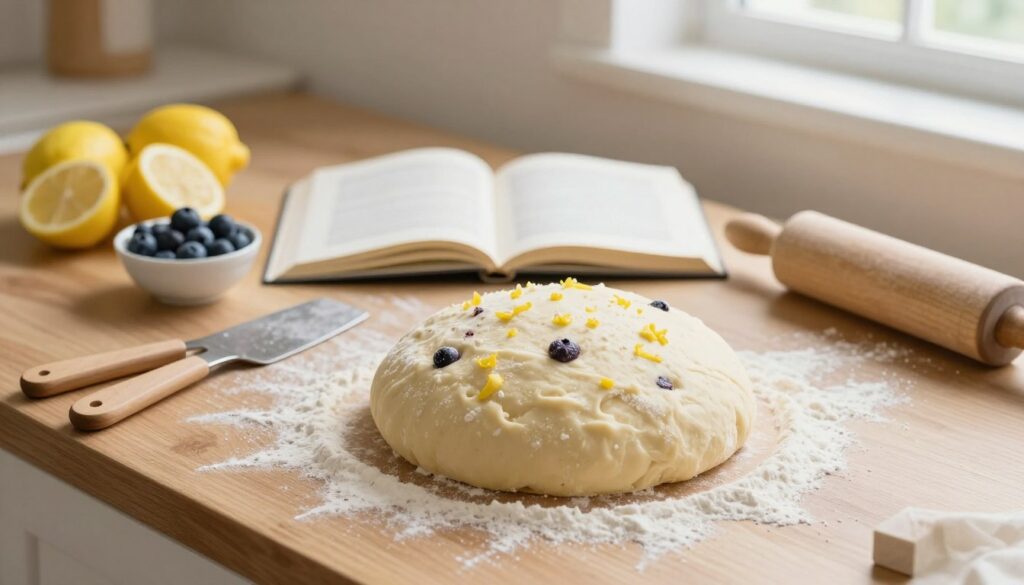
For the best results, you can proof at room temperature or in the cold. A cold proof in the fridge for 12 to 24 hours is best for home bakers. This slow fermentation brings out a deep, tangy flavor that’s key to great sourdough.
To check if your dough is ready, do the finger poke test. Press your floured finger into the dough about half an inch deep. If it springs back slowly, leaving a small dimple, it’s ready to bake.
The importance of proofing time
Time is crucial when working with wild yeast. Longer proofing times make the bread more digestible and improve its texture. Rushing this step can result in a dense, gummy loaf.
The table below shows the differences between proofing methods. It helps you plan your baking schedule effectively.
| Method | Timeframe | Flavor profile | Texture result |
|---|---|---|---|
| Room Temp | 2–4 Hours | Mild and subtle | Soft and airy |
| Cold Retard | 12–24 Hours | Deep and tangy | Chewy and structured |
| Short Proof | Under 1 Hour | Yeasty | Dense and heavy |
By using these techniques, your sourdough bread will always turn out great. Patience during proofing ensures every slice is light, flavorful, and perfectly fermented.
Preparing for baking
Getting your oven ready is key to making easy sourdough bread at home. The right setup helps your loaf rise well and get a deep, golden color.
Preheating your oven
Preheat your Dutch oven to 450°F for at least 30 minutes before baking. This makes sure the pot is hot enough to give your dough an immediate burst of heat.
A very hot pot is crucial for the dough to rise well. Without this heat, your bread might end up flat or dense.
Options for steaming your bread
To safely put your dough in the hot pot, use parchment paper or a bread sling. This keeps the dough from deflating when you put it in.
If you don’t have a Dutch oven, you can still make great bread. Just use a baking stone and a pan of water on the bottom rack for steam.
Steam is the secret ingredient for a crispy crust. It keeps the environment humid during the first half of baking. This lets the loaf expand fully before the crust sets.
Baking the bread
Now it’s time to turn your dough into a golden loaf. Your oven’s heat will make it happen. The key is to control the temperature right.
Ideal baking temperature and time
Heat your oven to 450°F for a strong rise. Put your dough in a preheated Dutch oven. This traps moisture well.
Keep the lid on for 25 to 35 minutes. It creates a mini oven effect. This lets the bread expand fully.
Then, take off the lid to let the crust brown. Bake for another 15 to 20 minutes. The crust should be golden brown. Check the bread’s internal temperature with a digital thermometer. It should be 205°F.
Tips for a perfect crust
For a great crust, manage your oven’s heat. If the bottom browns too fast, use a baking sheet as a shield. This prevents burning.
Steam helps get a crispy crust. Keep the lid on to keep the crust soft. Then, the dry heat will harden it. This makes the crust crunchy, like in professional lemon blueberry bread.
| Baking phase | Temperature | Duration | Goal |
|---|---|---|---|
| Steam Phase | 450°F | 25-35 Minutes | Maximum Rise |
| Crust Phase | 450°F | 15-20 Minutes | Golden Color |
| Final Check | N/A | Instant Read | 205°F Internal |
Cooling and storing
Keeping your homemade loaf perfect requires proper cooling and storage. The smell of fresh lemon blueberry bread is tempting, but wait before slicing.
Why cooling is essential
Place your loaf on a wire rack for at least two hours before cutting. This step lets the steam out and the inside set right.
Slicing the bread while it’s hot can make it gummy or doughy. It keeps cooking inside even after it’s out of the oven. So, waiting patiently is key for the best texture.
Best storage practices
After cooling, store your loaf right to keep it fresh. The right way prevents the crust from getting too soft or the bread from drying out fast.
Here are some easy tips to keep your lemon blueberry bread fresh for days:
- Store the loaf cut side down on a wooden cutting board to protect the crumb.
- Use an airtight container or a bread bag to keep moisture in.
- Avoid the refrigerator, as cold temperatures can make the starch stale faster.
- For long term storage, slice the bread and freeze it in a sealed freezer bag.
Freezing is a great way to enjoy your homemade lemon blueberry bread for weeks. Just toast a slice from the freezer for a quick, tasty snack.
Troubleshooting common issues
Mastering sourdough baking means learning to handle unexpected issues. Even with careful steps, your dough might act strangely. Knowing these quirks is key to artisan sourdough baking success.
Dealing with overproofed dough
Overproofed dough is too sticky or deflates fast when touched. This is due to yeast eating too much sugar, weakening the gluten. Don’t worry, you can still save it.
Just put the dough in an oiled 9×13 pan and make focaccia. This way, you get to enjoy the flavor in a new dish. It’s a great way to keep practicing artisan sourdough baking without wasting anything.
Fixing a dense bread loaf
A dense loaf often comes from a starter that’s not active enough or a short bulk fermentation. Make sure your starter doubles in size before mixing. Also, keep an eye on your kitchen’s temperature for artisan sourdough baking success.
If your bread is still dense, try longer bulk fermentation next time. Use high quality bread flour with enough protein for a better structure. Here’s a quick guide for common problems.
| Issue | Primary cause | Recommended fix |
|---|---|---|
| Dense Crumb | Under fermentation | Increase proofing time |
| Flat Loaf | Over proofing | Use as focaccia base |
| Hard Crust | Low humidity | Add steam to oven |
| Weak Rise | Inactive starter | Feed starter more often |
Creative ways to serve lemon blueberry sourdough
When you bake artisan sourdough, it’s not just about the baking. How you serve it can really make a difference. Once your loaf cools, you can explore many flavors. These highlight the lemon and blueberry notes in the bread.
Pairing suggestions
Enjoying this bread is simple. Just toast a thick slice until it’s golden. Then, add a bit of salted butter. It melts into the bread, mixing savory and sweet.
For something richer, try whipped cream cheese on the toast. Or, for a fancy touch, add tangy lemon curd. It adds a burst of lemon that goes great with the blueberries.
Delicious toppings to try
Make leftover slices into a fancy breakfast. Dip them in cinnamon spiced egg custard. Then, pan fry them for a French toast that shows off your artisan sourdough baking.
Here’s a table to help you pick the perfect topping for your next slice:
| Serving method | Best topping | Flavor profile |
|---|---|---|
| Classic Toast | Salted Butter | Simple and Savory |
| Morning Snack | Cream Cheese | Creamy and Rich |
| Gourmet Brunch | Lemon Curd | Bright and Zesty |
| Decadent Dessert | Honey and Berries | Sweet and Floral |
Whether plain or with toppings, your artisan sourdough baking will impress. Try different toppings to make each slice special to you.
Conclusion
Baking a loaf from scratch makes your kitchen feel like a professional bakery. You now know how to turn simple ingredients into a masterpiece.
Every time you bake sourdough bread with berries, you get better. Your hands learn the dough’s feel, and your eyes spot the perfect rise. This craft rewards patience with a crusty, flavorful result that store bought loaves can’t match.
Refining your craft
Don’t worry if your first loaf isn’t perfect. Each bake teaches you something new. Keep a journal to track how different temperatures or flour brands affect your sourdough bread with berries.
Embracing creative freedom
Your kitchen is a place for new flavor experiments. Try swapping blueberries for dried cranberries or adding a hint of cardamom. You can create unique recipes that show off your taste. Share your handmade creations with friends and family.
FAQ
Can I use frozen berries in my lemon blueberry sourdough bread?
While frozen berries can be used, fresh berries are recommended. Frozen berries release moisture, making the dough sticky and gummy.
How do I know if my sourdough starter is strong enough for this recipe?
Your starter should double or triple in volume within 4 to 6 hours of feeding. It should be full of bubbles. A “float test” can also indicate readiness.
My bread didn’t rise much in the oven; what happened?
Poor oven spring often results from under-proofing or a weak starter. Ensure proper bulk fermentation cues and preheat your Dutch oven well.
Is this one of those easy sourdough bread recipes for beginners?
Yes! This recipe is designed for beginners. It uses foundational techniques and includes fruit, which requires a bit more care.
How should I store sourdough bread with berries to keep it fresh?
Store the bread in a paper bag or bread box for 2-3 days. For longer storage, slice and freeze it. Toast slices directly from the freezer.
What is the best way to incorporate lemon flavor without making the dough too acidic?
Use a combination of fresh lemon zest and a small amount of juice. Rubbing the zest into sugar maximizes aroma without altering the dough’s pH.
Your email will not be published publicly.